Identification, timing and prevention shape the response.
The species, life stage, location and property conditions shape the response. These examples explain why identification and timing matter.
AI-generated illustration created for this website. For identification, compare the linked extension references.
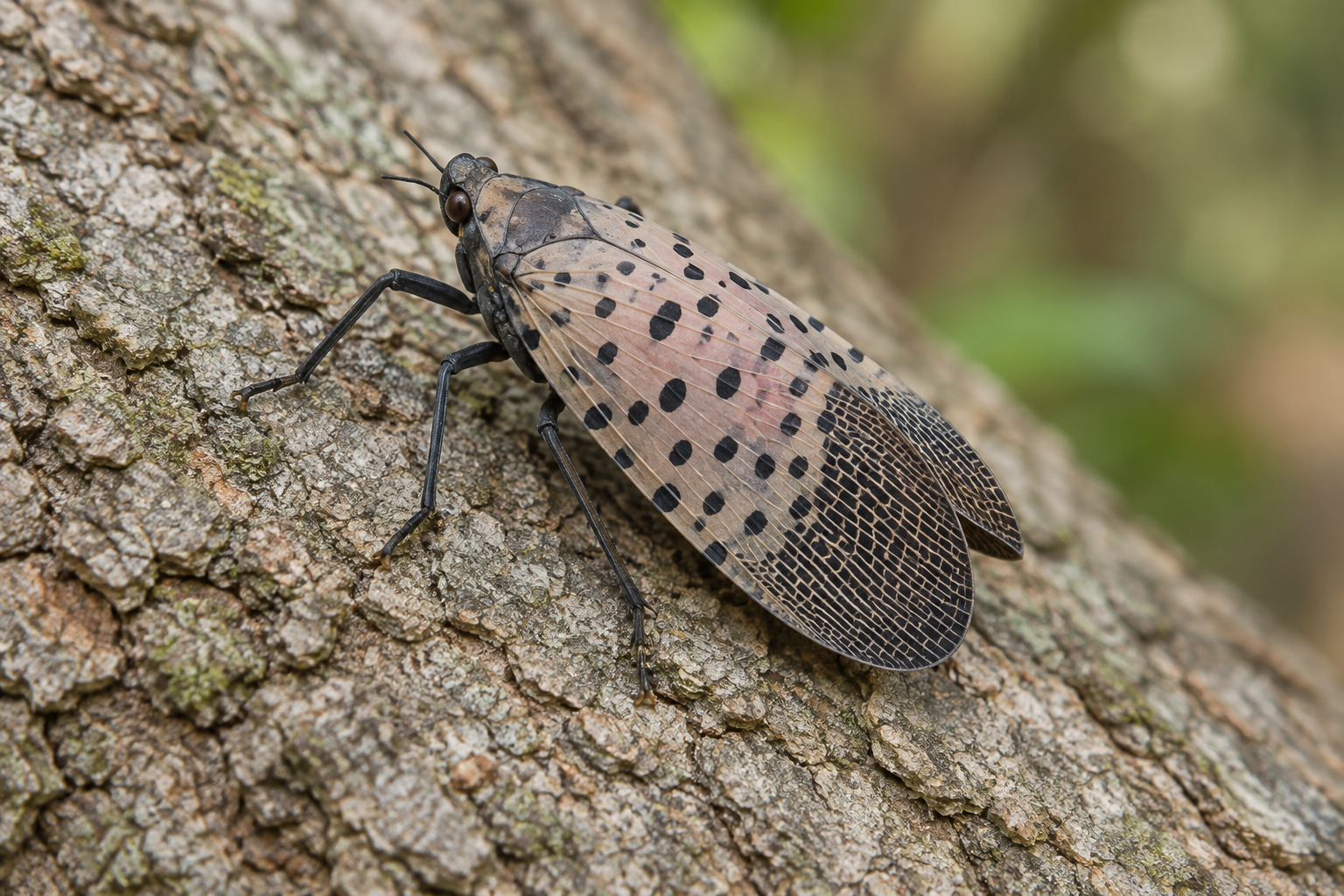
SPOTTED LANTERNFLY
Timing and movement matter.
Adults have spotted forewings; younger stages look different. Egg masses may occur on trees and outdoor objects.
Treatment fact: Appropriate treatments can reduce activity, but insects can move back from untreated areas. Return activity alone does not establish pesticide resistance. Treatment choices also depend on life stage.
Helpful next step: Check outdoor items before moving them and use current state guidance for identification and reporting.
AI-generated illustration created for this website. For identification, compare the linked extension references.
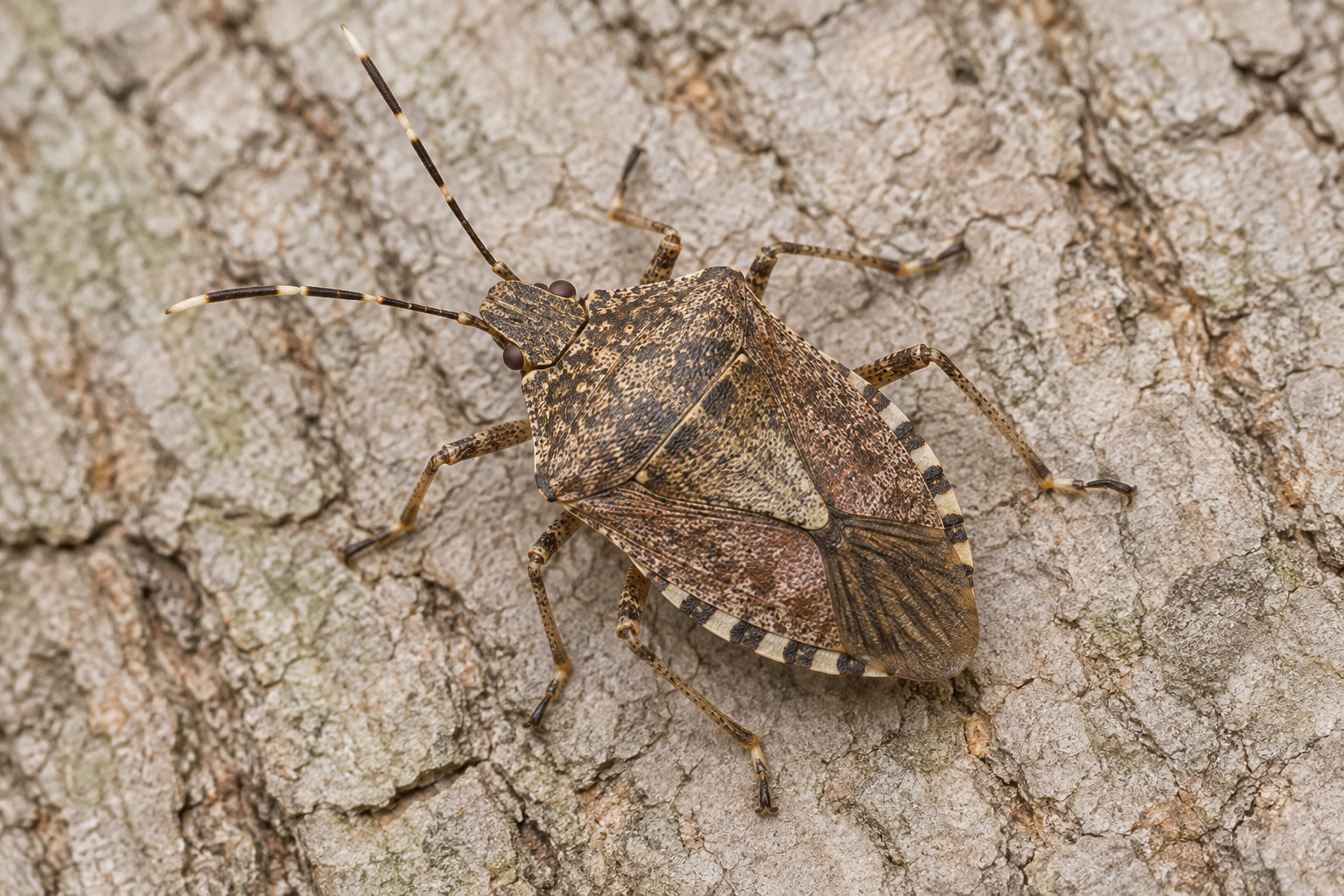
BROWN MARMORATED STINK BUG
Identify the species and the setting.
This invasive stink bug is one of several stink bug species in the region. Not every shield-shaped insect is the same pest; some stink bugs are beneficial predators.
Treatment fact: Stink bugs can be difficult to control with insecticides. Life stage, timing, and movement influence results; being difficult to control is not proof that a local population is resistant.
Helpful next step: Ask for identification and an assessment of activity around the structure or affected plants.
AI-generated illustration created for this website. For identification, compare the linked extension references.
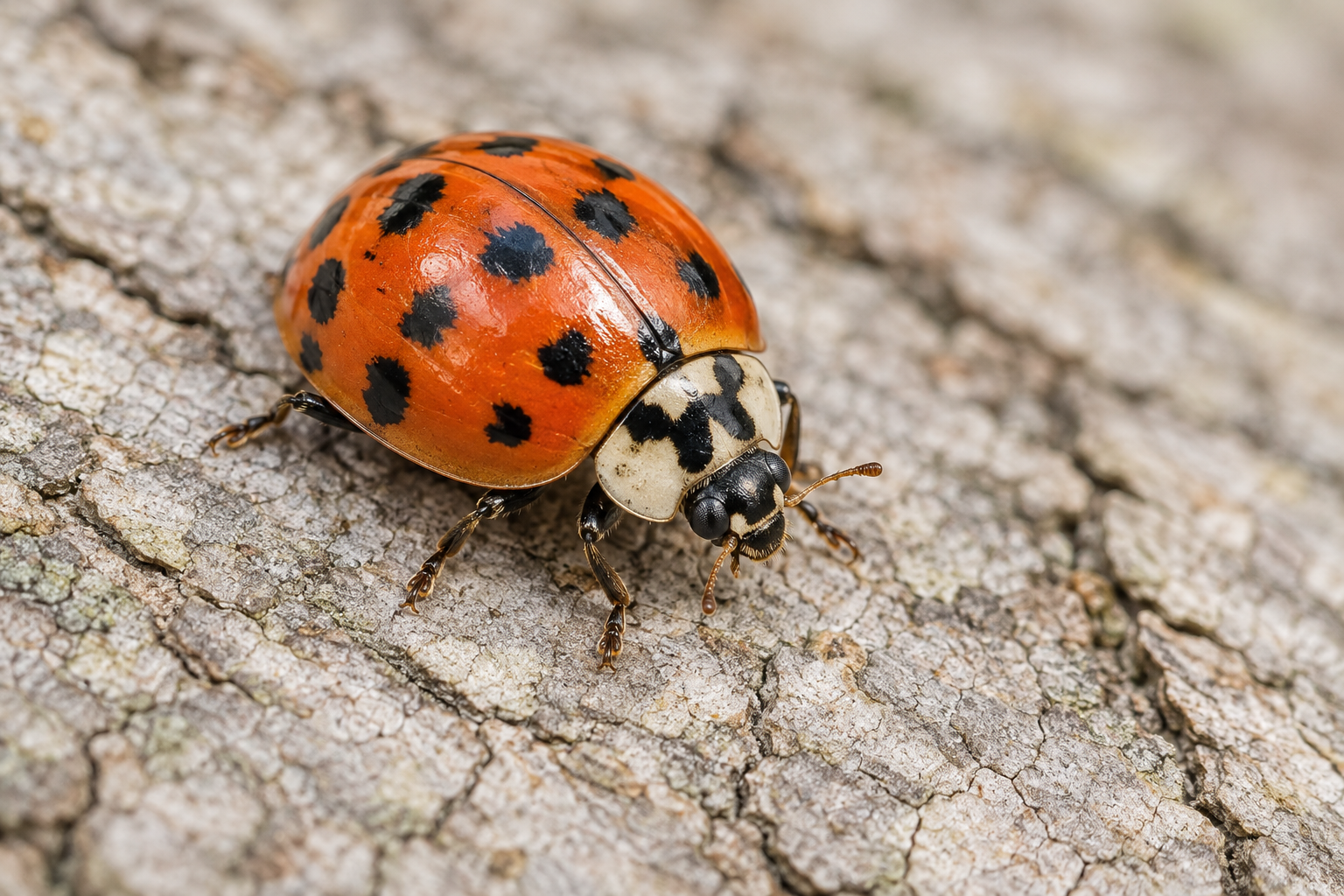
MULTICOLORED ASIAN LADY BEETLE
A predator outdoors. A nuisance indoors.
Colors and spot patterns vary. Adults may enter buildings in fall to overwinter, but they do not reproduce indoors.
Treatment fact: Virginia Cooperative Extension generally recommends physical removal and exclusion indoors, reserving insecticides for severe cases. This is a treatment recommendation, not a statement that all pesticide use is prohibited.
Helpful next step: Inspect screens, doors, utility openings, and other likely entry areas before fall gatherings begin.
Inspection, identification, monitoring, exclusion, and attention to contributing conditions help shape a property-specific plan. Seal-ups are quoted separately for each home’s needs. For invasive insects that seek shelter indoors to overwinter, such as brown marmorated stink bugs and multicolored Asian lady beetles, sealing gaps and other access points helps reduce their entry into the home.
SPECIES INFORMATION
Invasive bird species
House sparrows (Passer domesticus), European starlings (Sturnus vulgaris) and feral rock pigeons (Columba livia) are not protected under the federal Migratory Bird Treaty Act. This distinction does not cover every sparrow, starling or dove, and it does not establish an exemption from state licensing or other applicable requirements.
These introduced species are discussed here as invasive birds. Correct identification matters: many other sparrows and doves are native species, so a shared common name or similar appearance does not establish the same status.
The insect images are AI-generated illustrations created for this website, not photographs of identified specimens. Educational facts are supported by the linked references from Virginia Cooperative Extension, Virginia Tech and Virginia State University, and the EPA. These organizations do not endorse Goldsmith Land & Pest Solutions LLC.